
What You Will Learn From This Article
- What Discovery’s “Day Surgery Network” actually is, and which plans it applies to
- Exactly where to check whether a facility is in the network before you book any planned procedure
- What triggers the large upfront co-payment, and what avoids it entirely
- The specific preventative screening benefit many members don’t know exists
- What to do, and who to contact, if you’ve already been charged and think it shouldn’t apply to you
- Why this matters more, not less, as you approach retirement
A colonoscopy, gastroscopy, or similar day procedure on a Discovery Classic Comprehensive plan can cost you nothing upfront, or it can cost you R7,000 to R8,100 before you’re even admitted, depending entirely on one detail almost nobody asks about in advance: which specific facility the procedure happens at. This article explains exactly what that detail is, how to check it yourself in under five minutes, and what your other options are if you’ve already been caught out by it.
What the “Day Surgery Network” Actually Is
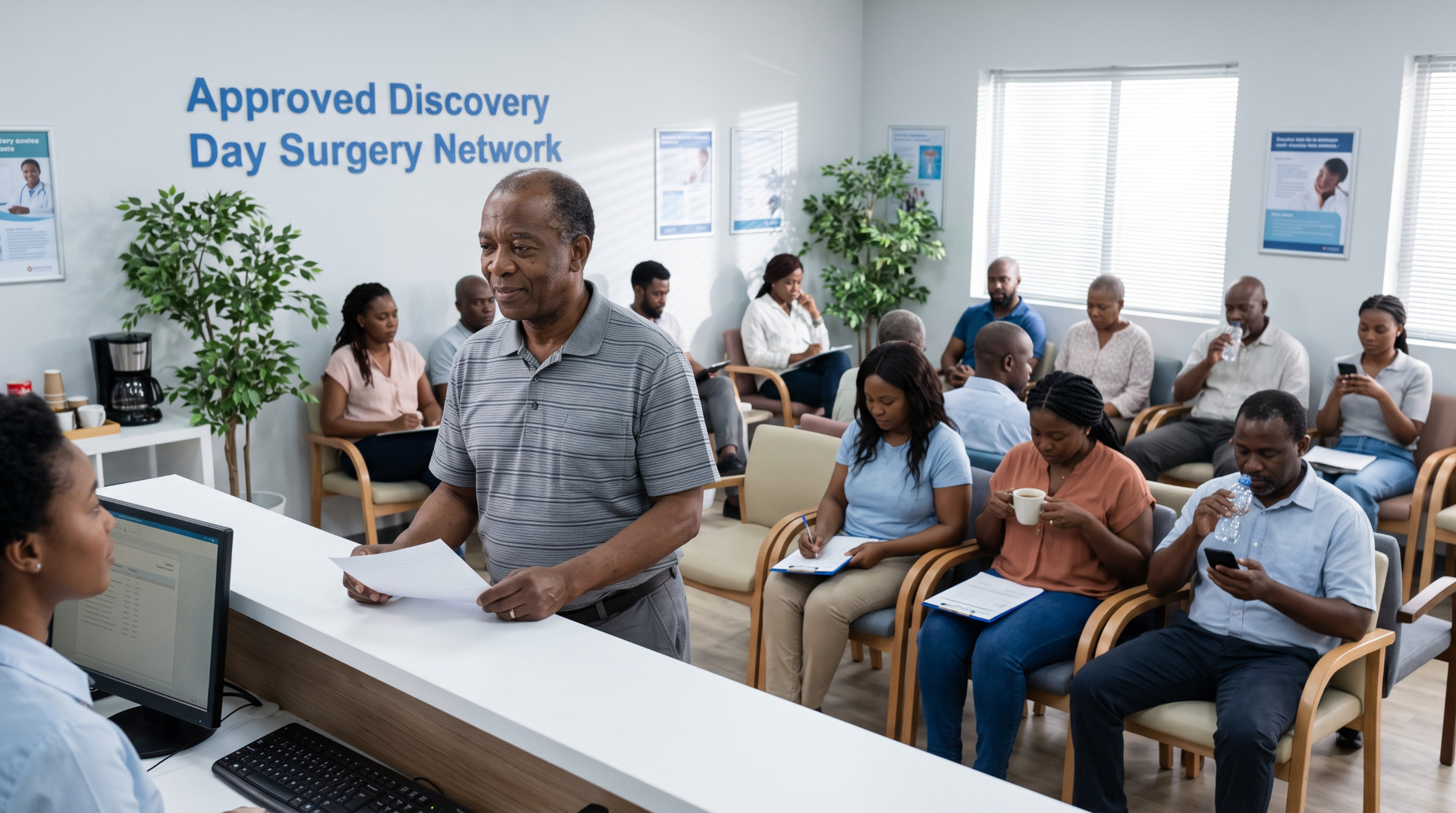
Discovery’s Day Surgery Network is a defined list of specific day hospitals and acute facilities where members on the Comprehensive, Core, KeyCare, Priority, Saver, and Smart plan series can have certain same-day medical procedures done, including gastroscopies and colonoscopies, with full cover. It is not about which doctor performs your procedure directly, it’s about which facility that procedure happens in. Members on the Executive plan are the exception; they can use any approved facility without this restriction at all.
Two things about this network catch people out repeatedly. First, it only covers a defined list of procedures, not every day surgery you might need, so being in-network for one type of procedure doesn’t automatically mean you’re covered for another. Second, and more importantly, Discovery states plainly that these network lists can change at any time, which means checking a list you saw a year ago, or even relying on what your specialist’s rooms told you last time, isn’t reliable enough for a new booking.
How to Actually Check Before You Book
There are two ways to confirm whether a facility is in the network, and you should use one of them before agreeing to a date and location for any planned scope, scan, or day procedure.
- Use the Medical Provider Search tool, sometimes called “Find a Healthcare Provider,” on the Discovery app or at www.discovery.co.za. This is designed specifically to direct you to an appropriate, conveniently located network facility for planned admissions.
- Alternatively, go directly to www.discovery.co.za, then Medical Aid, then Find Documents and Certificates, then Health Plan Guides, then Network Lists, to download the current Day Surgery Network list for your specific plan option.
- Ask your specialist’s rooms directly which facility they intend to use for your procedure, and then independently confirm that specific facility appears on the current network list yourself, rather than simply trusting that the rooms have checked.
Do this every time, even if you’ve had the same procedure before at the same specialist. A facility that was in-network last year is not guaranteed to still be in-network this year.
What Actually Triggers the Large Co-Payment
On the Classic Comprehensive plan specifically, a planned scope performed outside the Day Surgery Network triggers an upfront payment of R7,000, rising to R8,100 if both a gastroscopy and colonoscopy are done in the same admission. On Classic Smart Comprehensive, the equivalent out-of-network figures run considerably higher. These amounts are published in Discovery’s own benefit guides and are separate from, and in addition to, any shortfall between what Discovery pays and what your specialist actually charges.
There is an important exception built into the rule itself: in a genuine emergency, no out-of-network penalty applies, even if the facility you’re taken to isn’t on the list. This co-payment structure is specifically designed to apply to planned, scheduled procedures where you had the opportunity to choose your facility in advance.
What Gets You Full Cover With No Co-Payment At All
Three situations avoid the upfront payment entirely, according to Discovery’s own documentation: the procedure is done in the doctor’s rooms rather than a hospital or day facility, it forms part of a confirmed Prescribed Minimum Benefit condition, or the patient is under the age of 12. Of these, the PMB route is the one worth understanding properly if you’re facing a diagnosis rather than a pure screening procedure, since once a condition is confirmed as a PMB, the co-payment structure discussed above no longer applies at all.
The Screening Benefit Many Members Don’t Know Exists
Separately from the network and PMB rules above, Discovery’s Screening and Prevention Benefit explicitly lists colonoscopy for the detection of colon cancer as a covered screening test, funded from a dedicated risk benefit rather than your day-to-day or savings benefit. If you’re booking a colonoscopy purely as a preventative screen, with no symptoms, it’s worth asking your specialist’s rooms and Discovery directly whether your specific procedure can or should be pre-authorised and processed under this benefit, rather than assuming it will automatically be billed as a standard day procedure subject to the network co-payment rules above.
If You’ve Already Been Charged: How to Query It
If you’ve already paid an upfront amount and believe it shouldn’t apply, whether because you believe the facility was in-network, the procedure should have qualified under the Screening and Prevention Benefit, or a PMB condition was in fact confirmed, contact Discovery directly and ask them to review the specific claim against these rules by name. If your initial query doesn’t resolve the matter, Discovery provides an online complaints form on www.discovery.co.za specifically for cases where a member feels an earlier query wasn’t properly addressed. Keep a written record of every query you submit and every response you receive, the same discipline that matters for any dispute with a financial services provider.
Why This Matters More as You Approach Retirement
An unexpected R7,000 to R8,100 bill is an irritation at any age. In the years immediately before retirement, it’s something more costly than that. Every rand diverted to an avoidable medical co-payment is a rand that didn’t go toward your retirement contributions, your emergency fund, or simply staying on track with the savings plan you’ve built. And the procedures most likely to trigger this specific network co-payment, scopes, screenings, and day surgery generally, are also the ones that become more frequent, not less, as you move through your fifties and sixties.
The single most useful habit this article can leave you with is simple: before any planned medical procedure from now on, spend the five minutes to check the network status of the specific facility yourself, using the tools above, rather than assuming your specialist’s rooms have already handled it on your behalf. It’s a small, repeatable action with a direct, quantifiable effect on how much of your own money stays in your pocket, and eventually in your retirement savings, rather than going out the door as an avoidable upfront fee.
Key Takeaways
- Discovery‘s Day Surgery Network is a specific list of facilities, not doctors, where a defined list of same-day procedures, including scopes, are covered in full; it varies by plan and can change at any time
- Check network status yourself before every planned procedure, using the Medical Provider Search tool on the Discovery app or website, or the Network Lists section under Find Documents and Certificates
- Using an out-of-network facility for a planned Classic Comprehensive scope triggers a R7,000 to R8,100 upfront payment; emergencies are exempt from this penalty entirely
- Procedures done in the doctor’s rooms, tied to a confirmed PMB condition, or performed on a patient under 12 avoid the upfront payment altogether
- A separate Screening and Prevention Benefit specifically covers colonoscopy for colon cancer detection; ask whether your procedure qualifies under this benefit before assuming standard day-procedure rules apply
- If you’ve already been charged and believe it was incorrect, query it directly with Discovery and use their online complaints form if the first response doesn’t resolve it
Your Qusetions Answered
Is the Day Surgery Network about the hospital or the doctor?
It’s about the facility, the specific day hospital or acute facility where the procedure takes place, not which doctor performs it. Always confirm the facility itself is listed, even if you trust and have used the same specialist before.
Does the Day Surgery Network cover every procedure?
No. It applies to a defined list of same-day procedures set out in Discovery’s own network documentation, which includes common scopes like gastroscopy and colonoscopy, but you should confirm your specific procedure is on the current list rather than assuming.
What if my procedure becomes an emergency partway through?
Discovery’s own rules state that no out-of-network penalty applies in a genuine emergency, even if the facility you end up at isn’t on the network list. The co-payment structure is aimed specifically at planned, scheduled procedures.
Can I ask my specialist to simply confirm the facility is in-network for me?
You can and should ask, but it’s worth independently verifying it yourself as well using Discovery’s own tools, since network lists change and your specialist’s information may not always be current at the exact time you book.
What should I do if I already paid an out-of-network co-payment I think was wrong?
Contact Discovery directly, reference the specific rule you believe should have applied, whether that’s network status, a confirmed PMB condition, or the Screening and Prevention Benefit, and if the response isn’t satisfactory, escalate using Discovery’s online complaints form, keeping a written record throughout.
This article was researched and drafted with the assistance of AI tools and reviewed for accuracy. It is general information about Discovery Health Medical Scheme’s publicly available benefit rules at the time of writing, not personalised medical or financial advice, and is not a substitute for confirming your specific plan’s current rules directly with Discovery Health. Network lists, benefit amounts, and rules can change; please verify current details on www.discovery.co.za or by contacting Discovery Health directly before relying on them for a specific procedure.
Related posts:
 Invert, Always Invert: The Question That Could Save Your Retirement Savings
 How to lodge an official query/complaint against your pension fund
 Pension fund member complaints up significantly
 How to Claim your portion of unclaimed benefits from your pension fund
 How to be sure you are not being scammed by an unclaimed benefit tracing agent